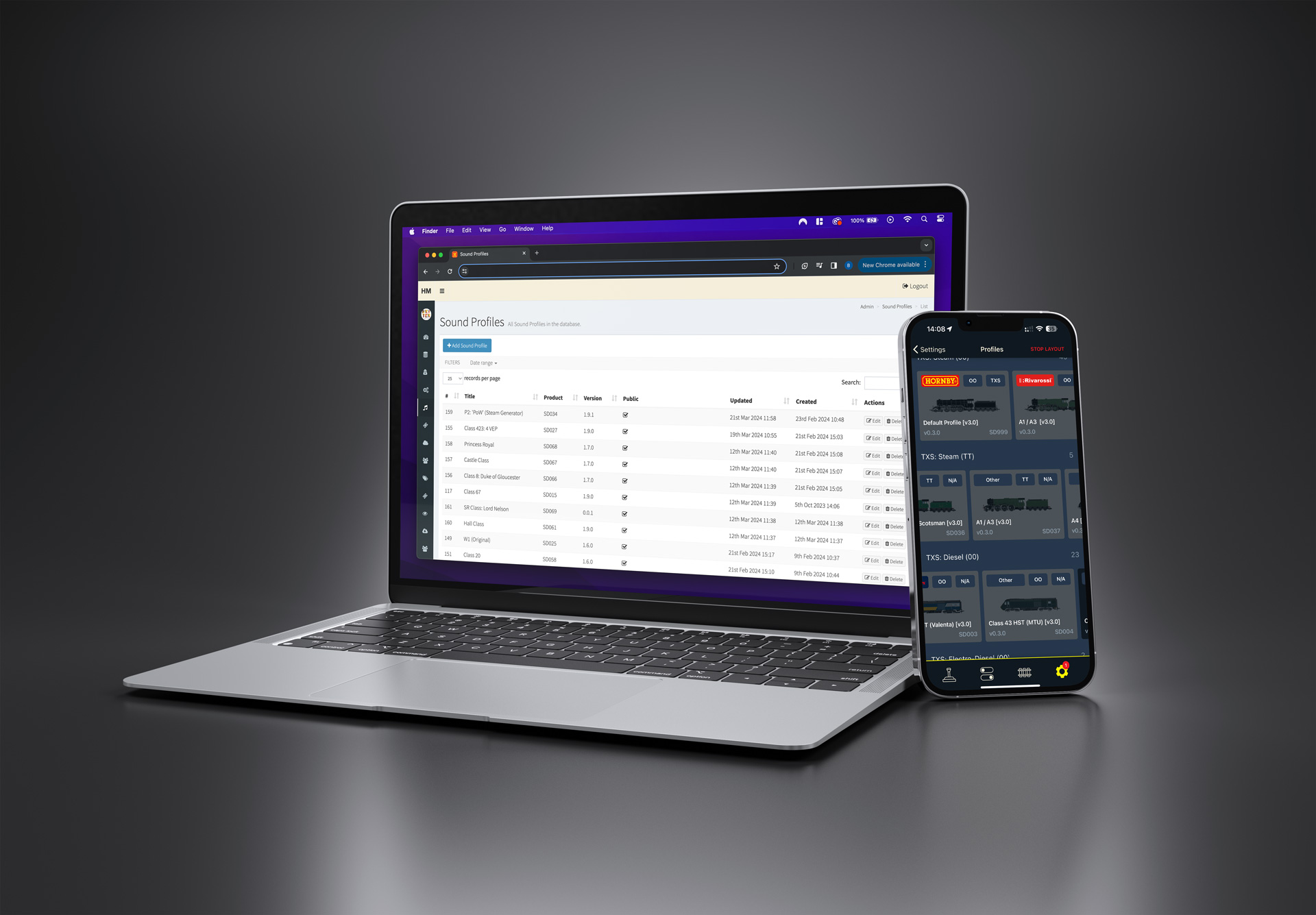
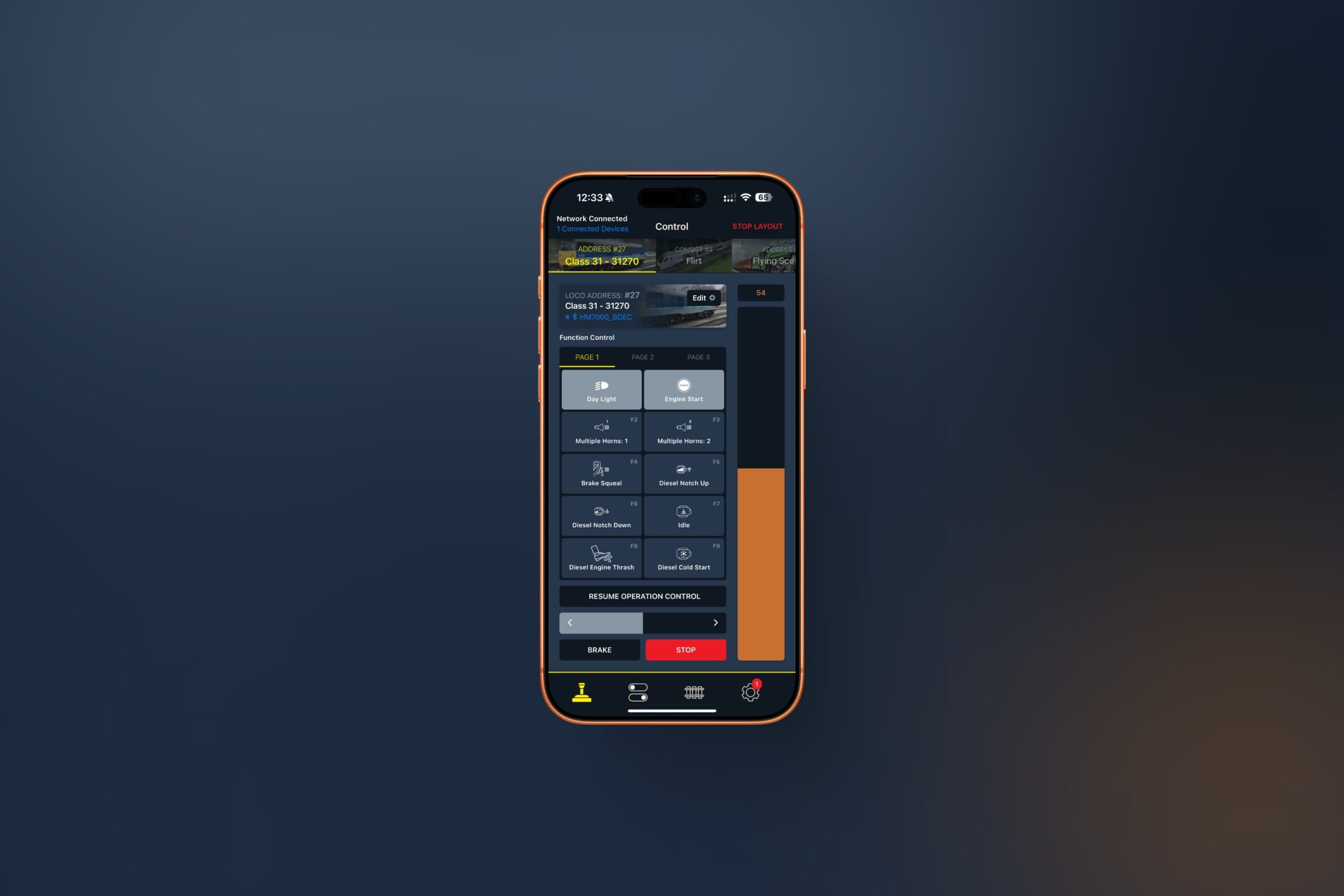
A bespoke CMS and content delivery platform powering over-the-air updates, sound packs and dynamic data for the HM | DCC app.
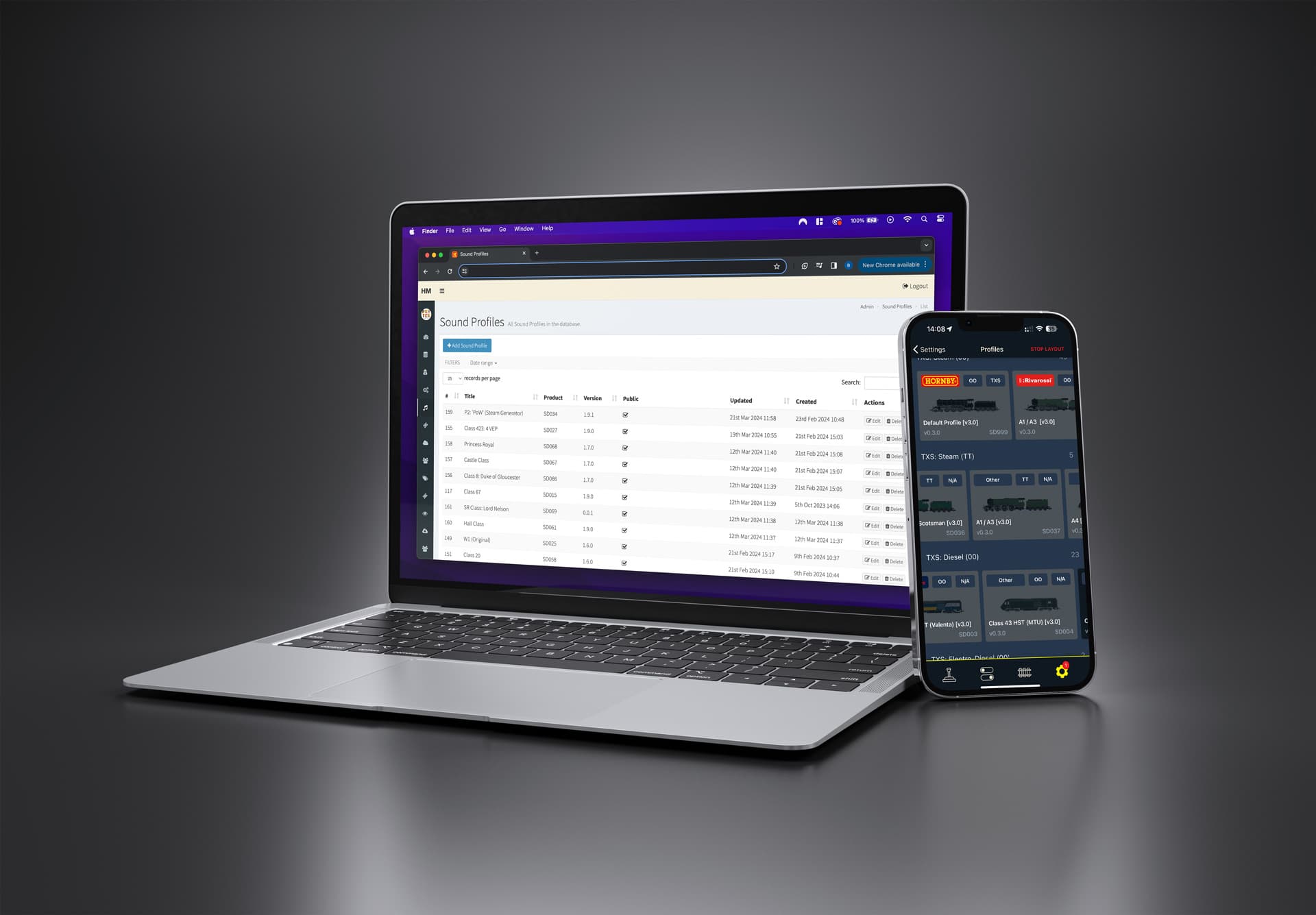
Hornby Hobbies is one of the most established names in model railways, with a product range that increasingly blends physical hardware with modern digital experiences. Their HM7000 and HM7040 decoders, paired with the HM | DCC mobile app, give enthusiasts a practical way to configure, update and personalise their locomotives from a phone.
To support that ecosystem at pace, Hornby needed a reliable backend platform that could serve critical app content continuously, without being constrained by app store release cycles.
Client
Hornby Hobbies
Project
Content Management System
Industry
Consumer Electronics / IoT
Location
Global
The challenge
Hornby required a dedicated portal to act as the single source of truth behind the HM | DCC app. It needed to manage a growing catalogue of structured content and deliver it reliably at scale, including:
- Sound packs hosted centrally, downloaded in-app and flashed to decoders via Bluetooth mesh
- Firmware updates and release management for decoder hardware
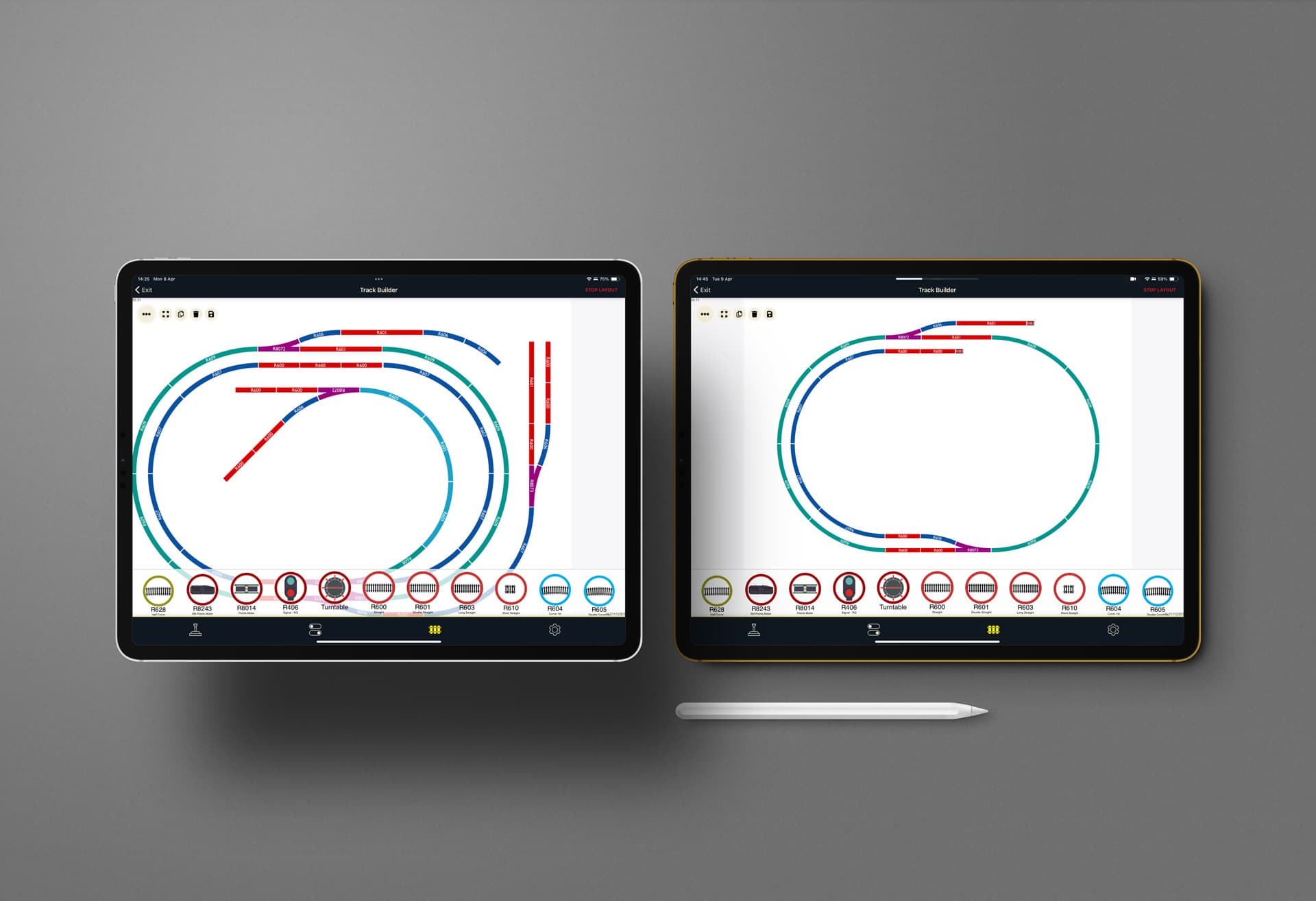
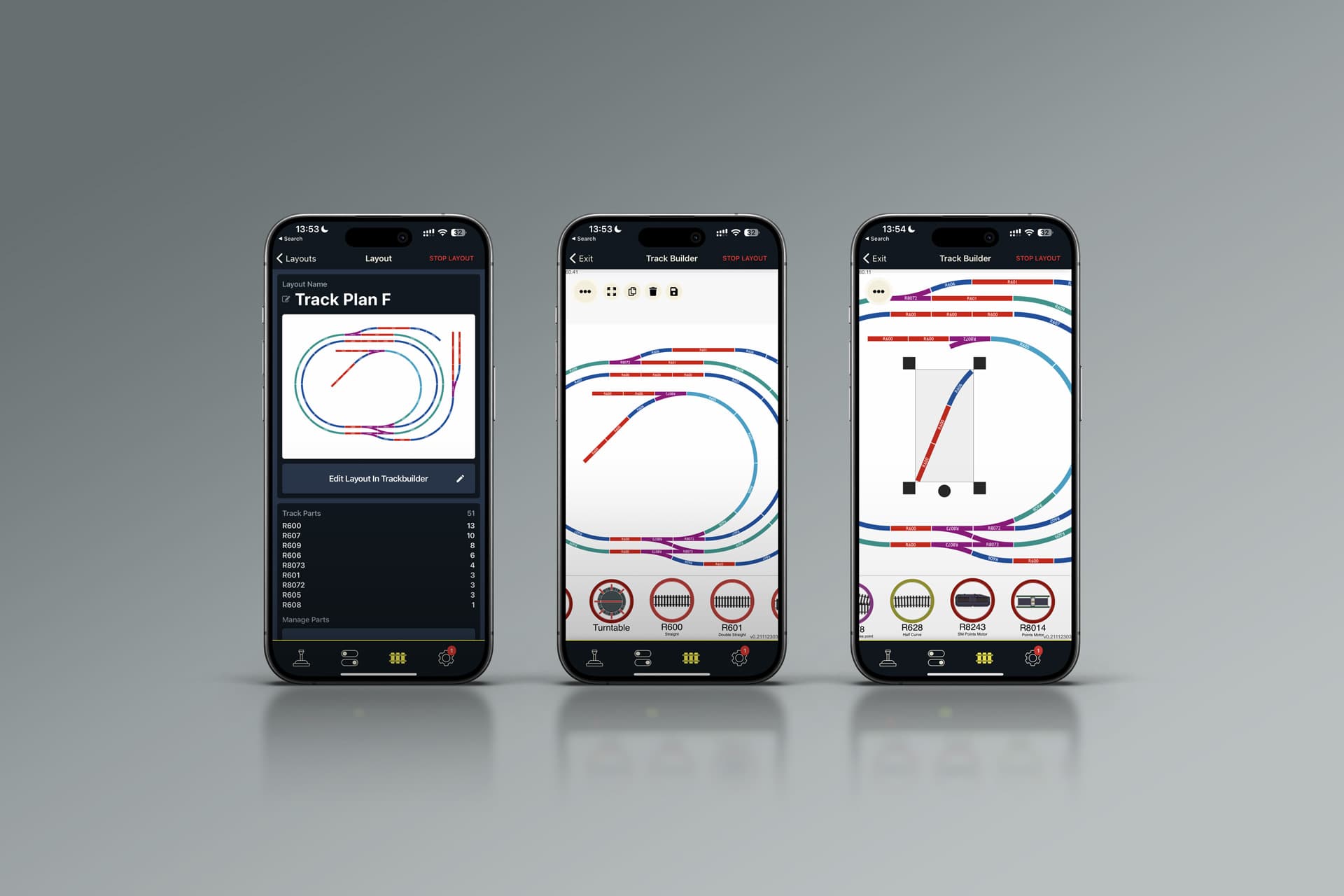
- TrackBuilder plans delivered as structured app content
- Over-the-air app bundles to extend and refine app functionality without full store releases
- App translations served dynamically and updated over the air
- Locomotive CV setups and configuration datasets that evolve over time
Alongside feature breadth, the platform needed to be operationally robust, with performance and uptime appropriate for a high-traffic production service.
Our approach
We designed the HM Portal as a content and distribution platform first, with CMS authoring workflows built around it.
Bespoke Laravel CMS foundation
Rather than adapt an off-the-shelf admin tool, we built the portal on Bryter Digital’s in-house Laravel CMS, giving us full control over content modelling, validation, publishing rules, and the tooling required to support frequent updates safely.
Delivery-first architecture
Because the portal’s primary consumer is the HM | DCC app, we designed the platform around predictable, cache-friendly delivery. The result is a system that supports high request volume while still enabling Hornby to iterate quickly on content types and releases.
Controlled change management
We implemented CMS tooling for revisions, rollbacks and release management, so Hornby can ship updates with confidence and reverse changes quickly if needed, without disrupting the end-user experience.
Design & development
Core capabilities delivered
The HM Portal hosts and distributes multiple content streams that directly power the in-app experience:
- Sound pack hosting and delivery for in-app downloads and decoder flashing workflows
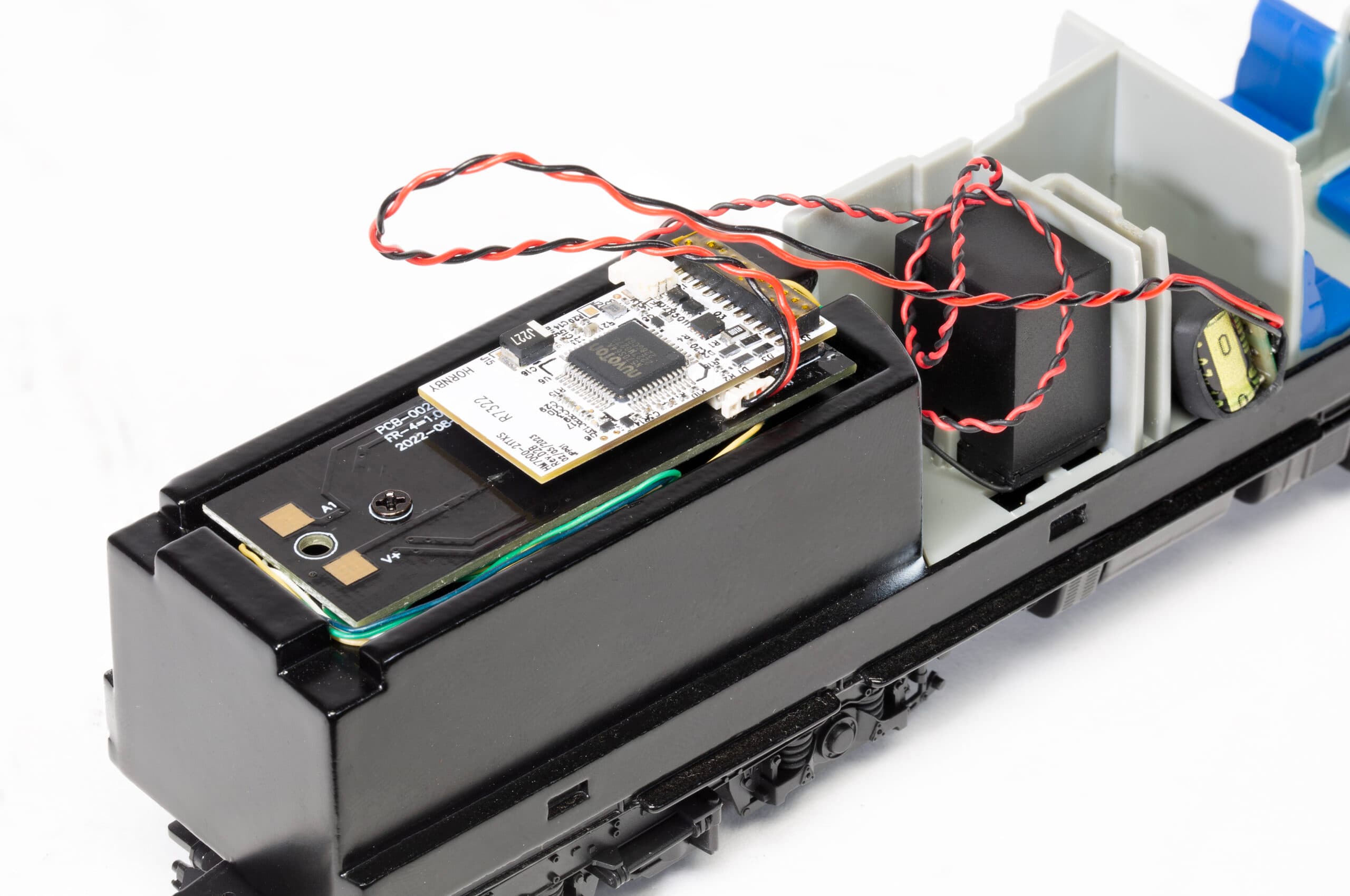
- Firmware update distribution for HM7000/HM7040 decoders
- TrackBuilder plan management served as structured content
- OTA JavaScript bundle delivery, enabling the HM | DCC app to receive functional updates on the fly
- Translation delivery over the air, keeping localisation current without store releases
- CV setup datasets to support consistent locomotive configuration
Performance and scale via CDN and cache layers
To handle the portal’s throughput, we implemented a CDN-backed delivery approach with cache layers, ensuring fast global responses and reducing load on origin services.
Reliability and operational discipline
The portal is monitored with uptime monitoring and built with the expectation that it will remain available as a critical dependency of the HM | DCC app experience.
Outcome
The HM Portal now functions as Hornby’s central distribution platform for HM | DCC content, supporting rapid iteration without compromising stability.
- 18M+ requests served per month
- 250GB+ data delivered per month
- 0 downtime to date, supported by uptime monitoring
The result is a scalable platform that gives Hornby direct operational control over app content, updates, and feature delivery, while keeping the end-user experience fast, consistent and resilient.