We’ve recently rolled out a significant update to the HM | DCC application, following a substantial period of development focused on Bluetooth performance, locomotive control and the overall experience of running HM7000-equipped locomotives.
Working in collaboration with Hornby, one of the key areas we jointly focused on was the Bluetooth connection process. As HM | DCC has grown considerably since its original launch, with more devices, configurations and increasingly complex layouts in use, there was a shared opportunity to rethink and improve some of the underlying connection logic.
The result is one of the most noticeable performance improvements we’ve made to the app to date.
Significantly faster Bluetooth connections
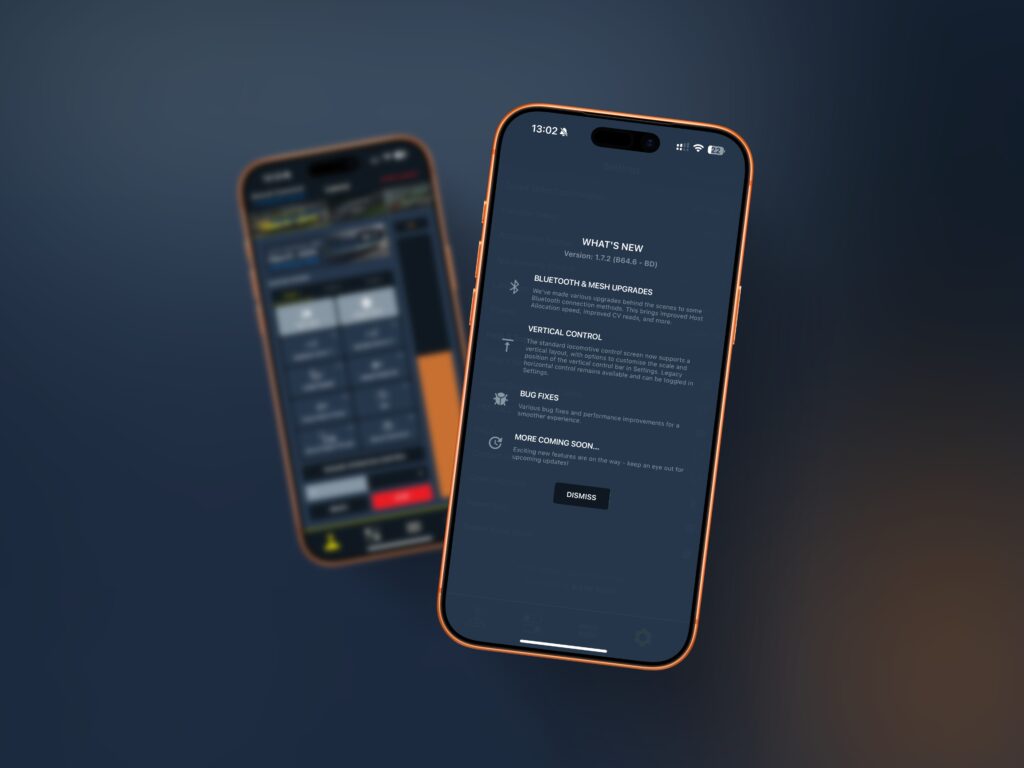
A major part of this update involved reworking the Bluetooth connection and host allocation system used by HM | DCC.
For users with larger collections and more complex layouts, establishing the appropriate host connection could previously take longer than we wanted. Rather than simply making small adjustments around the existing process, we spent considerable development time looking at how devices are discovered, evaluated and allocated within the system.
Following those changes, we’re now seeing initial host allocation and connection complete in around five seconds on average in suitable conditions.
It makes a substantial difference in practice. Put a locomotive on the track, open the app and you can be controlling it within seconds.
For an application built around direct interaction with a physical railway, reducing the time between wanting to run a locomotive and actually controlling it was an important improvement.
A new vertical locomotive controller
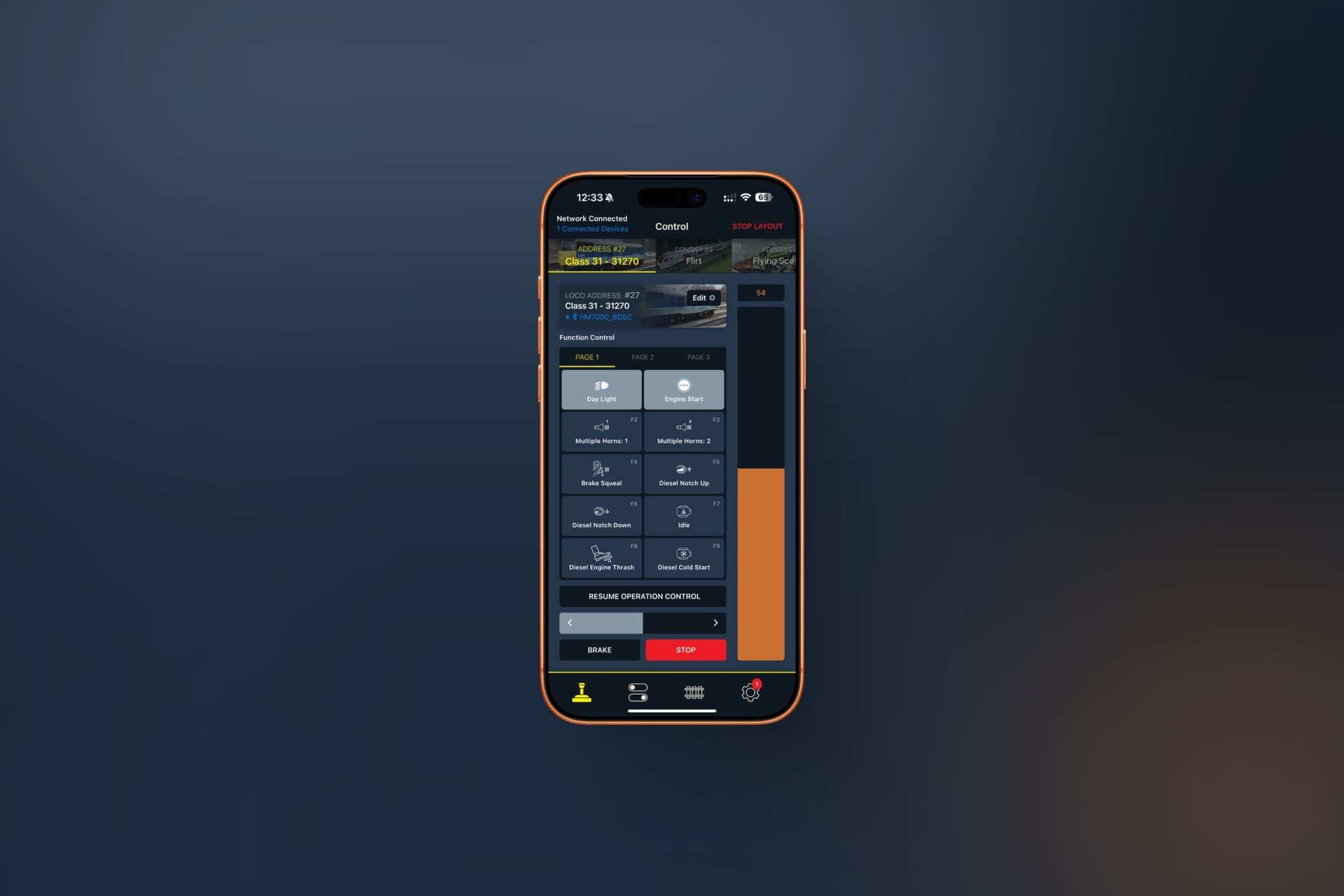
We’ve also updated the standard locomotive control interface.
The new layout introduces the vertical speed slider already familiar from other areas of the HM | DCC experience, creating greater consistency across the application and providing a control layout that we feel works particularly well on mobile and tablet devices.
We also recognise that existing users have developed their own preferences and muscle memory over time.
Rather than simply replacing the original controller, users can choose between the new vertical control layout and the legacy horizontal slider. Both remain available, allowing each user to configure the app around the way they prefer to operate their railway.
Improvements throughout HM | DCC
There is considerably more happening behind the scenes in this update.
We’ve made improvements to CV synchronisation when linking, refined CV reading behaviour and continued developing the way child devices are allocated within the Bluetooth mesh.
There are also numerous smaller interface, reliability and usability improvements throughout the application. Individually these changes may be less visible than the new controller or faster connection process, but collectively they contribute to making HM | DCC faster, more predictable and easier to use.
A lot of the work in an application like HM | DCC happens beneath the interface. Bluetooth communication, device state, mesh behaviour and physical hardware all need to work together reliably. Improving that underlying architecture remains just as important to us as introducing new features.
The response from HM | DCC users
Perhaps the most rewarding part of releasing the update has been seeing the response from hobbyists actually using it on their layouts.
One user commented:
After the 2nd update it found and connected to the locos on the track in seconds and I quite enjoyed myself today running trains on the app.
Another summed up the connection improvement rather neatly:
My old Lima/Hornby class 20 connected before the wheels were properly on track.
The improvement has also been particularly noticeable for users who had previously experienced longer connection times:
The Update offered today on the HM7000 App is Revelatory! Connecting / reconnecting a decoder via Bluetooth could sometimes take up to 10 minutes to pick up, now post update it takes just 5 seconds!
And the combination of interface and connectivity improvements has received some great feedback too:
I’m really pleased with this latest firmware update……the new layout is excellent and the Bluetooth connectivity, in particular, is now very much improved – almost instantaneous in my case (iPad Pro). Well done the development team!
We’ve also seen users picking up on some of the smaller interface refinements:
Excellent update for me – especially now that the function button overlap between icon and description is sorted. Well done! Really hope this indicates more regular app development – but now I’m a happy bunny!
For a development team, feedback like this is incredibly valuable. Performance figures and testing give us one side of the picture, but seeing improvements translate into a noticeably better experience on real layouts, across different locomotives, devices and configurations, is what ultimately matters.
Continuing our work with Hornby
Bryter Digital has worked closely with Hornby on HM | DCC and the wider HM7000 ecosystem, combining mobile application development with Bluetooth hardware communication, APIs, digital infrastructure and tools built specifically for model railway enthusiasts.
This latest update is another important step in the continued development of the platform.
There’s always more that can be improved, refined and explored, and we’re looking forward to continuing our work with Hornby on the next generation of ideas and innovations for HM | DCC.
The latest HM | DCC update is available now for iOS and Android.