Bluetooth & IoT app development
for connected products
UK mobile app development for products that communicate with hardware, combining BLE, Bluetooth Mesh, mobile UX, backend systems and connected-product architecture.
Bluetooth and IoT app development for products that have to work in the real world
A connected-product app is different from a conventional mobile application. The interface may live on a phone, but the user experience depends on what happens between the app, the device, the network and the systems behind it.
Bryter Digital develops mobile applications for connected products where Bluetooth Low Energy, Bluetooth Mesh, APIs and backend services form part of the same product experience. Our mobile app development team works across iOS and Android, while our wider app and bespoke software development capability allows us to design the supporting platform around the mobile product rather than treating connectivity as an isolated feature.
That can include device discovery, provisioning, connection state, control interfaces, synchronisation, over-the-air data transfer and application workflows built around physical hardware. We also work alongside hardware and firmware teams where behaviour has to be coordinated across disciplines.
Based in Canterbury and working across the UK, we support product teams, manufacturers and established organisations that need a development partner capable of understanding both the mobile experience and the technical systems underneath it.
BLE, Bluetooth Mesh and the architecture behind the app
Bluetooth-connected products vary significantly in complexity. A single BLE peripheral with a narrow command set presents a different engineering problem from a Mesh network containing multiple provisioned devices, shared state and more complex control behaviour.
Bluetooth Low Energy application development
BLE is well suited to many connected products because it provides efficient local communication between mobile devices and hardware. The challenge is making discovery, connection, command handling and data transfer robust across different phones, operating systems and real-world environments.
Bluetooth Mesh app development
Mesh introduces additional concerns around provisioning, node identity, network state and communication across multiple devices. The mobile application needs to make that underlying complexity manageable without forcing users to understand the network model itself.
Native capability inside cross-platform applications
Cross-platform development can still require lower-level native work. On the right project, a shared application codebase can sit alongside bespoke native modules for the parts of the product that need deeper access to Bluetooth behaviour or platform-specific APIs.
Backend and cloud services
Many IoT products also need accounts, configuration, content, firmware or asset delivery, analytics and administrative control outside the local Bluetooth connection. We can design these services through our API development and backend capability so the app, device and wider platform operate as a coherent system.
HM | DCC: Bluetooth Mesh at product scale
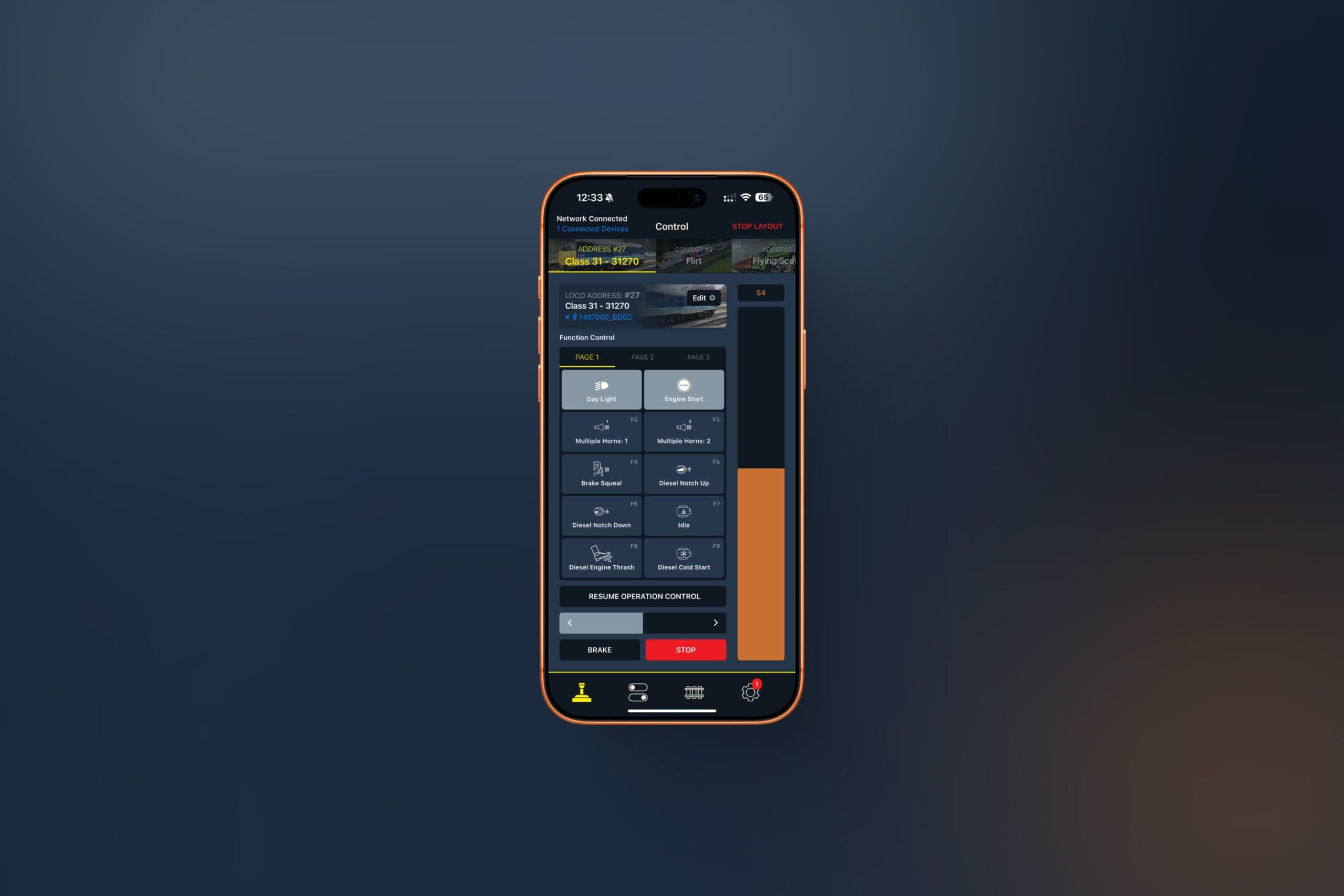
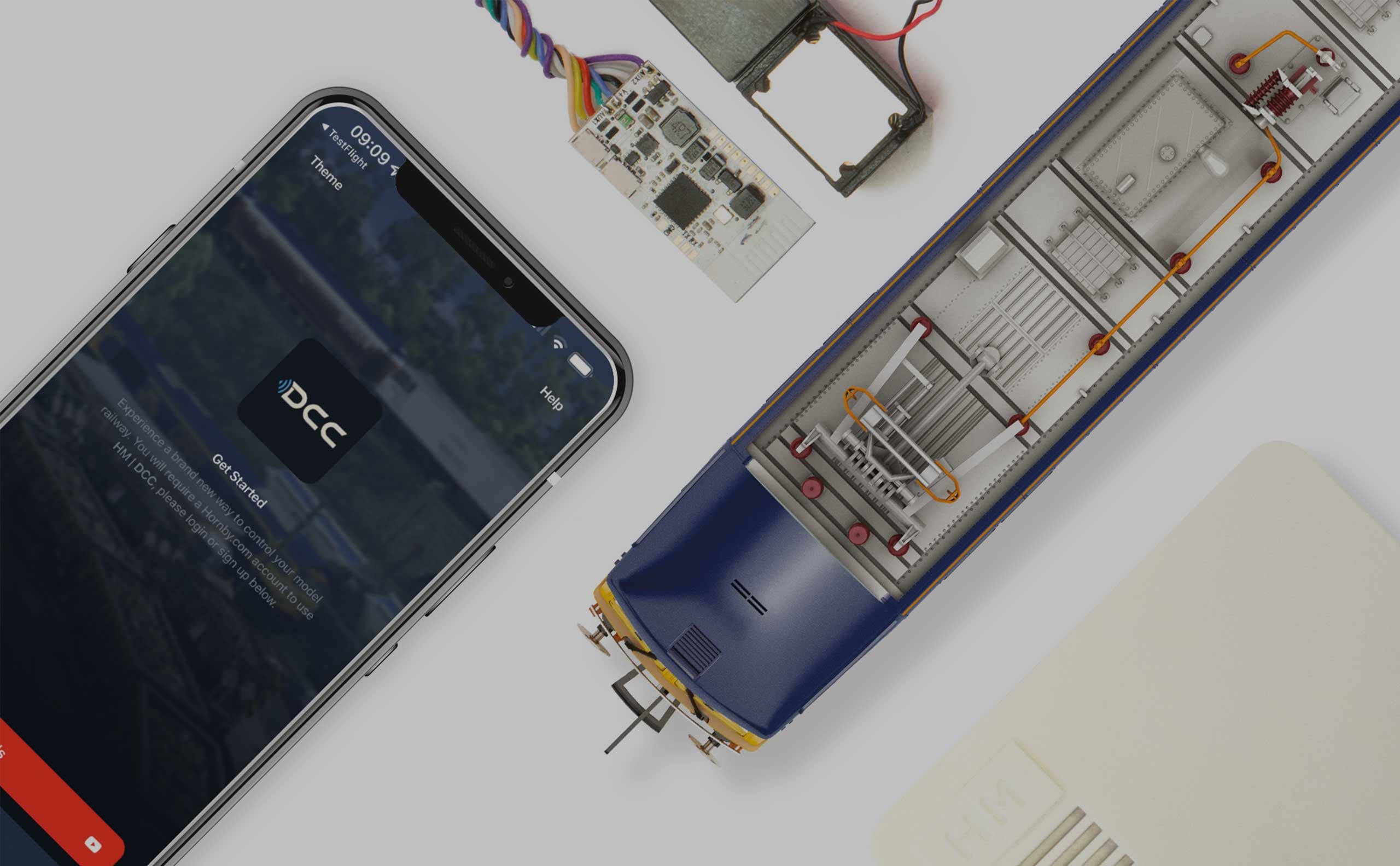
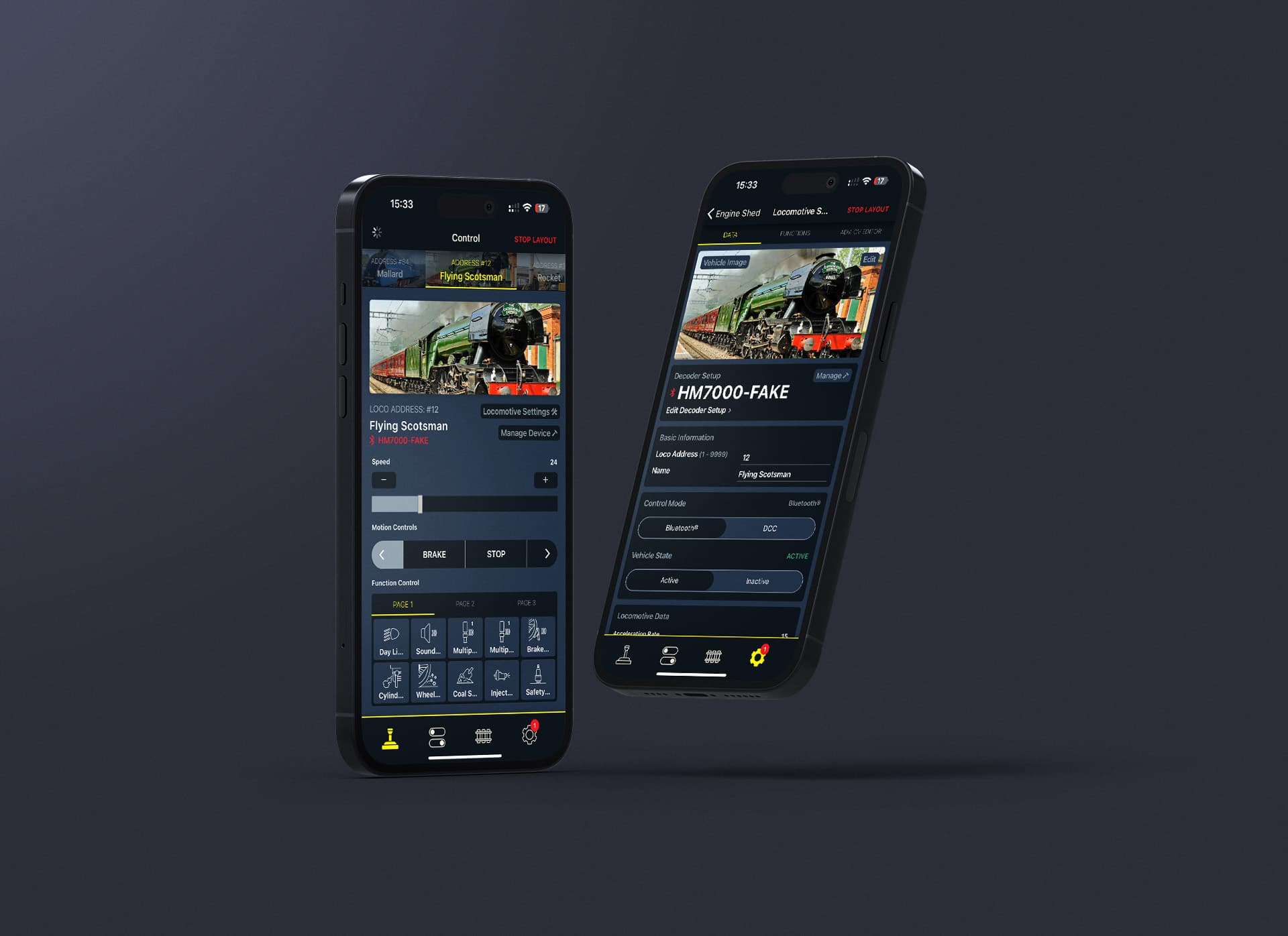
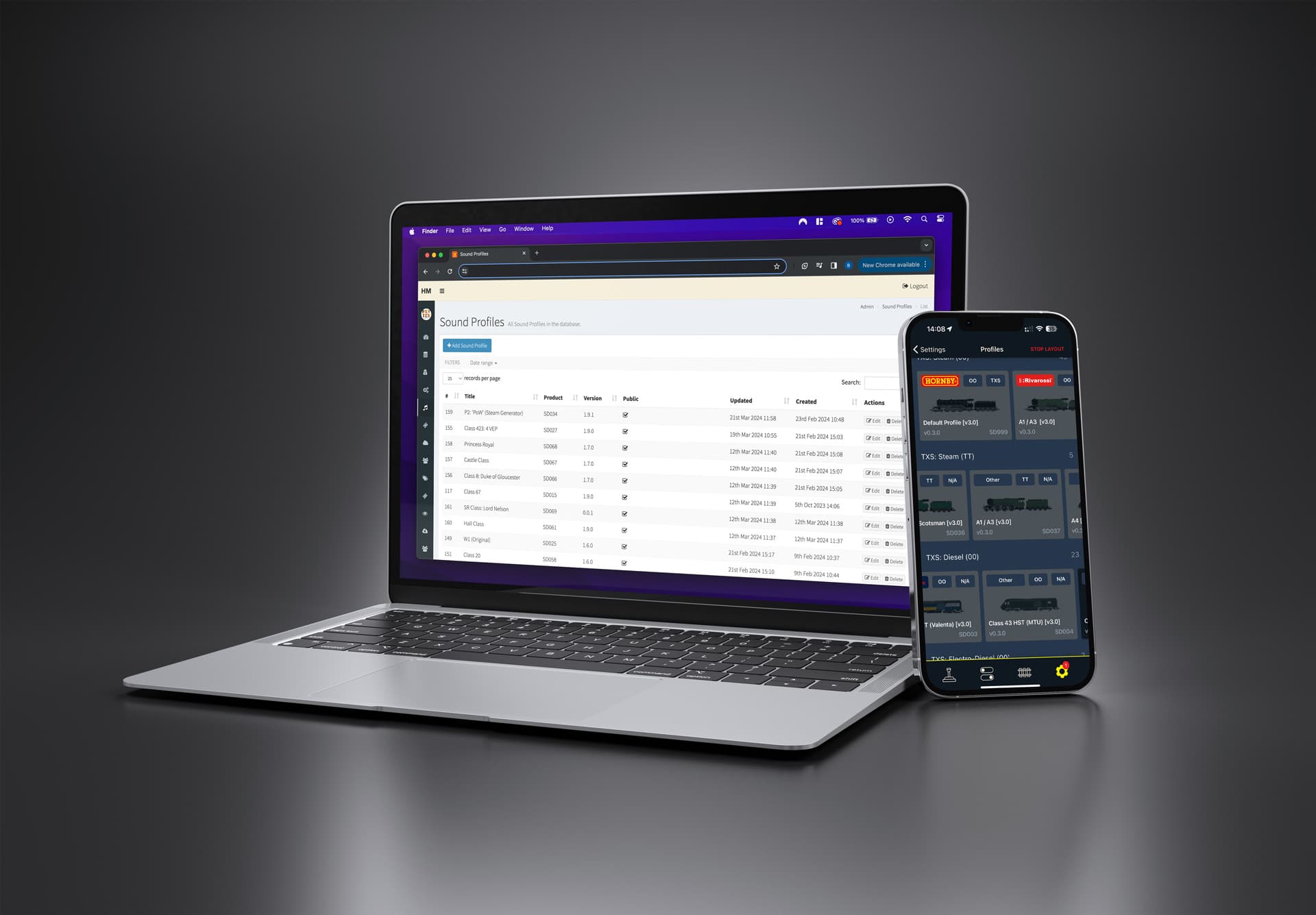
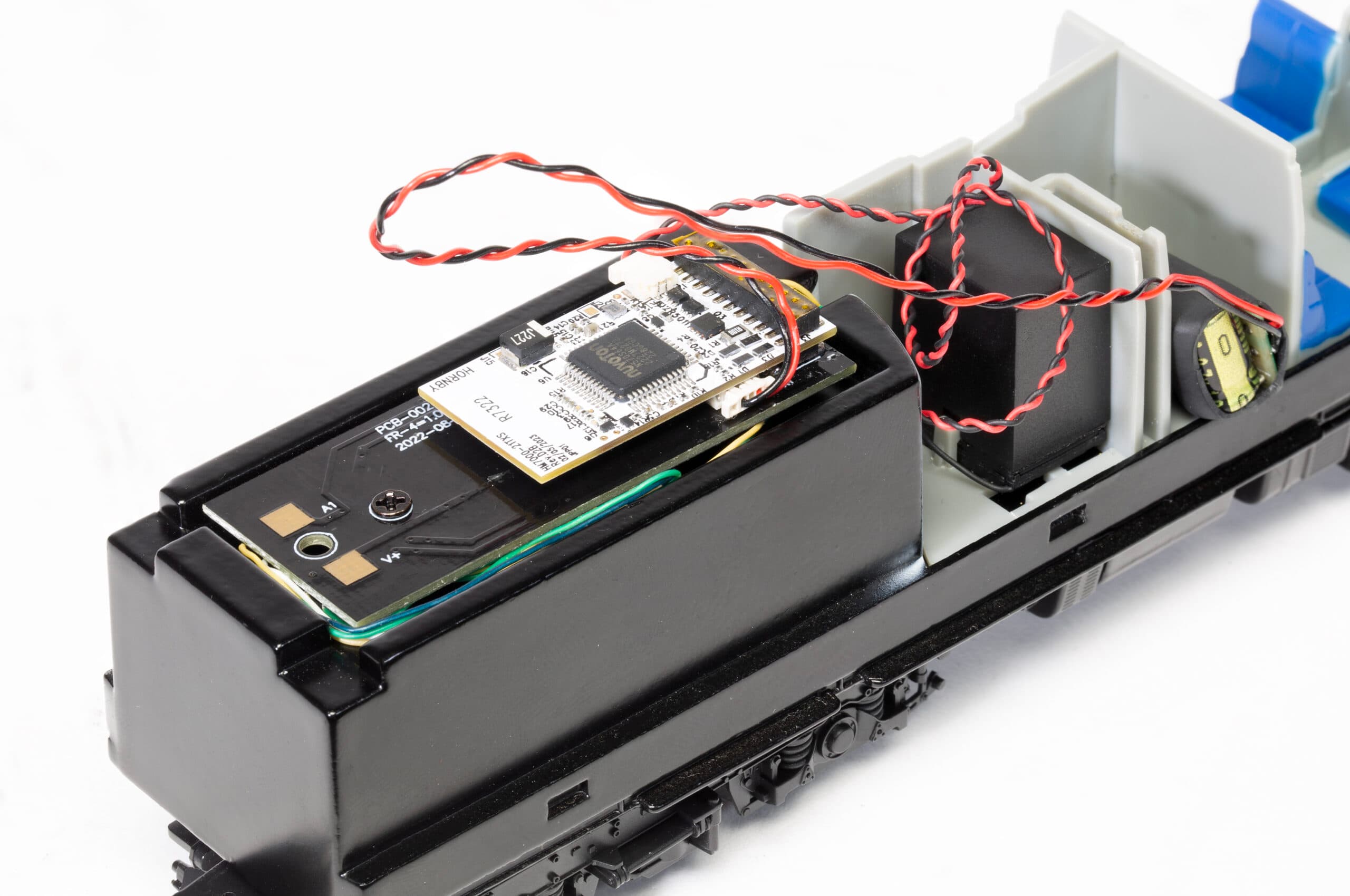
Our work with Hornby HM | DCC is a clear example of connected-product development where the mobile application, Bluetooth network and backend platform all form part of the product.
The application uses React Native across iOS and Android, with bespoke native modules handling lower-level BLE Mesh requirements including provisioning, node management, device discovery and network synchronisation. Users can configure and control HM7000 and HM7040 decoders wirelessly, replacing traditional track-based programming with direct over-the-air interaction.
The product also supports sound profile and firmware-related delivery over Bluetooth, requiring controlled binary transfer and robust error handling. Behind the app, HM Portal provides the content and service layer used for configuration, decoder metadata, sound distribution and operational control.
That is why we describe this work as an IoT platform rather than a standalone mobile app. The experience depends on hardware, mobile software and backend services behaving as one system.
Our HM | DC work extends that experience into another connected model railway product, with mobile control, Bluetooth Mesh and close collaboration with Hornby’s hardware engineering team.